
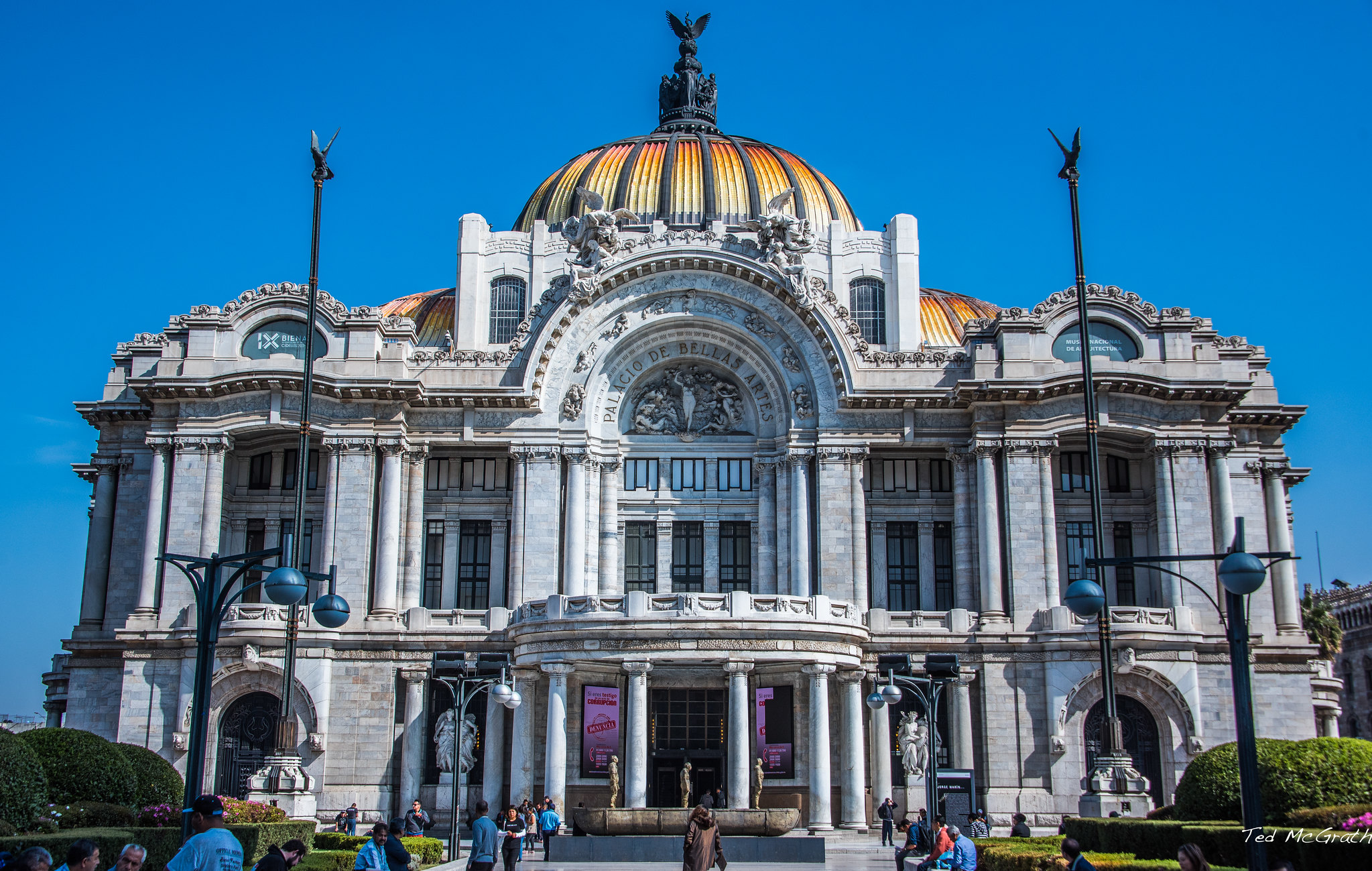
The Palacio de Bellas Artes, a crown jewel of Mexico City’s architectural landscape, has undergone a fascinating evolution since its inception. This iconic structure, which stands as a testament to the country’s rich cultural heritage, has a story that spans over a century and reflects the changing tides of architectural styles and political climates.
The tale of the Palacio begins in the early 20th century when President Porfirio Díaz commissioned the building as part of his grand vision for modernizing Mexico. Initially conceived as a National Theater, the project was entrusted to Italian architect Adamo Boari in 1904. Boari’s original design was a stunning blend of Art Nouveau and Neoclassical styles, reflecting the European influences that were popular during the Porfiriato era.
However, the path to completion was far from smooth. As construction began, unforeseen challenges emerged. The marshy soil of Mexico City’s former lakebed proved to be a formidable opponent, causing the heavy marble structure to sink. This setback, combined with the outbreak of the Mexican Revolution in 1910, brought the project to a grinding halt.
For years, the unfinished Palacio stood as a silent witness to the political turmoil that gripped the nation. It wasn’t until 1932 that the project was revived under the guidance of Mexican architect Federico Mariscal. Mariscal’s involvement marked a significant shift in the building’s architectural direction.
While preserving much of Boari’s exterior design, Mariscal introduced elements of the Art Deco style that had gained popularity in the intervening years. This fusion of styles created a unique aesthetic that set the Palacio apart from its contemporaries. The interior, in particular, showcased this new direction with its geometric patterns, stylized motifs, and innovative use of materials.
One of the most striking features added during this period was the building’s iconic glass curtain, designed by Mexican artist Diego Rivera. This masterpiece of stained glass, depicting the volcanoes Popocatépetl and Iztaccíhuatl, became a symbol of the Palacio’s blend of art and architecture.
As the years passed, the Palacio continued to evolve. The theater, originally designed to seat over 7,000 people, was scaled down to a more intimate 1,900 seats. This change allowed for better acoustics and a more focused performance space, enhancing the venue’s reputation as a world-class cultural center.
The building’s exterior also saw changes over time. The original plan for a large dome was abandoned, and instead, a series of smaller cupolas were added, giving the Palacio its distinctive silhouette. These modifications, while departing from Boari’s initial vision, contributed to the building’s unique character and charm.
Throughout its history, the Palacio has faced numerous challenges, including the effects of Mexico City’s notorious subsidence. Ongoing restoration efforts have been crucial in preserving this architectural marvel for future generations. These projects have not only addressed structural issues but have also sought to enhance the building’s functionality while respecting its historical significance.
Today, the Palacio de Bellas Artes stands as a living monument to Mexico’s architectural and cultural evolution. Its eclectic style, blending Art Nouveau, Neoclassical, and Art Deco elements, tells the story of a nation in transition. From its tumultuous beginnings to its current status as a beloved cultural icon, the Palacio’s architectural journey mirrors the complex and vibrant history of Mexico itself.
As visitors walk through its halls, they’re not just experiencing a building, but a century of artistic and architectural transformation. The Palacio de Bellas Artes remains a testament to the enduring power of vision, perseverance, and the ever-evolving nature of art and architecture.
The Palacio de Bellas Artes stands as a cultural icon and architectural masterpiece in Mexico City. Its stunning Art Nouveau exterior and Art Deco interior showcase the country’s artistic heritage, while its role as a premier venue for performing arts and exhibitions solidifies its importance in Mexico’s cultural landscape. The palace’s murals by renowned artists like Diego Rivera and its status as a UNESCO World Heritage site further emphasize its significance. As a symbol of Mexican identity and creativity, the Palacio de Bellas Artes continues to inspire and educate visitors, serving as a testament to the nation’s rich artistic traditions and ongoing commitment to the arts.