
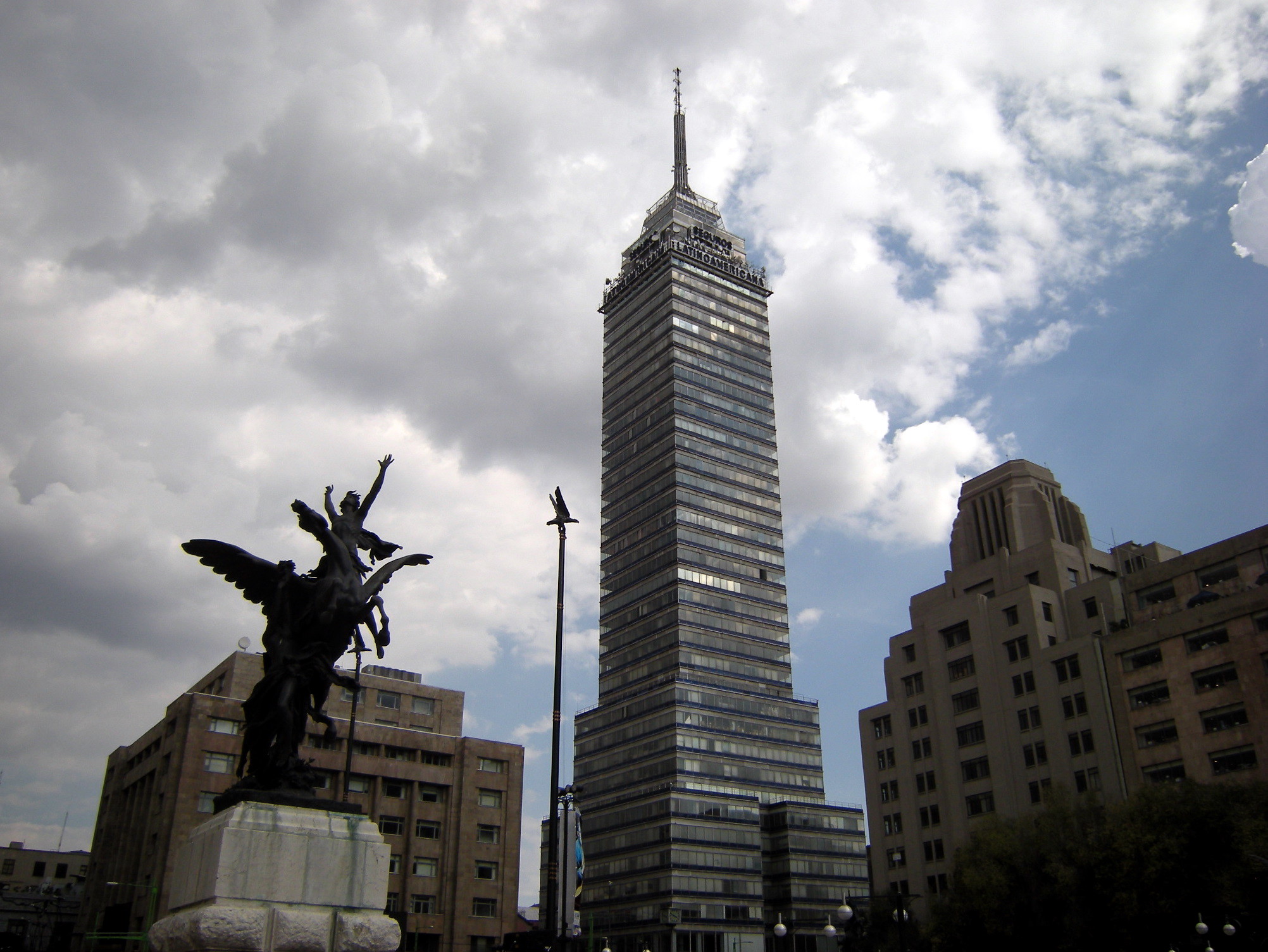
The Torre Latinoamericana stands tall as an iconic symbol of Mexico City’s skyline, its sleek silhouette a testament to the city’s architectural prowess and historical resilience. This 44-story skyscraper, completed in 1956, has become more than just a building – it’s a beloved landmark that represents the spirit of innovation and progress in the heart of one of the world’s largest metropolises.
At first glance, the Torre Latinoamericana might not seem particularly remarkable to the casual observer. However, its significance lies not just in its appearance, but in the groundbreaking engineering that went into its construction. Built on the notoriously unstable soil of Mexico City’s former lakebed, the tower was designed to withstand the frequent earthquakes that plague the region. This feat of engineering was put to the test during the devastating 1985 earthquake, which toppled many other buildings but left the Torre Latinoamericana standing strong.
The building’s ability to withstand such powerful seismic forces is due to its innovative design. The structure is supported by 361 pylons that descend 33 meters into the ground, anchoring it firmly in place. Additionally, the tower’s unique shape – wider at the base and narrower at the top – helps distribute its weight more evenly, further enhancing its stability. These engineering marvels have made the Torre Latinoamericana a source of pride for Mexico City residents and a subject of study for architects and engineers worldwide.
Beyond its structural significance, the Torre Latinoamericana has played a crucial role in shaping Mexico City’s urban landscape. When it was completed, it was the tallest building in Latin America, a title it held for many years. This distinction helped put Mexico City on the map as a modern, forward-thinking metropolis. Even today, as taller skyscrapers have sprung up around it, the Torre Latinoamericana remains a focal point of the city’s skyline, its clean lines and distinctive antenna serving as a visual anchor amidst the urban sprawl.
The tower’s impact on Mexico City’s architecture extends beyond its physical presence. Its success paved the way for future skyscrapers in the city, demonstrating that it was possible to build tall, modern structures in the challenging geological conditions of the Valley of Mexico. This opened up new possibilities for urban development and helped shape the vertical growth of the city in the decades that followed.
Interestingly, the Torre Latinoamericana’s architectural significance isn’t limited to its exterior. The building’s interior spaces have also played an important role in the city’s cultural life. The observation deck on the 44th floor offers breathtaking panoramic views of Mexico City, making it a popular tourist destination and a favorite spot for locals to gain a new perspective on their sprawling metropolis. The tower has also housed various businesses, offices, and even a museum dedicated to the building’s history and construction.
As Mexico City continues to evolve and grow, the Torre Latinoamericana remains a constant presence, bridging the gap between the city’s past and its future. Its enduring popularity and architectural significance serve as a reminder of the ingenuity and resilience of Mexican engineering and design. Whether viewed from street level or from the air, the Torre Latinoamericana continues to captivate and inspire, standing as a proud symbol of Mexico City’s place in the world of modern architecture.
In a city known for its rich history and vibrant culture, the Torre Latinoamericana represents a harmonious blend of progress and tradition. It serves as a testament to Mexico City’s ability to embrace modernity while staying true to its roots, making it an integral part of the city’s architectural heritage and a true icon of the Mexican capital’s skyline.
The Torre Latinoamericana stands as an iconic symbol of Mexico City’s resilience and architectural innovation. Completed in 1956, it was the world’s first major skyscraper built in a seismically active zone. Its revolutionary design has allowed it to withstand multiple earthquakes, including the devastating 1985 Mexico City earthquake. The tower’s observation deck offers panoramic views of the sprawling metropolis, making it a popular tourist attraction. As Mexico’s first skyscraper, the Torre Latinoamericana represents a pivotal moment in the country’s modernization and continues to be a testament to Mexican engineering prowess and urban development.