
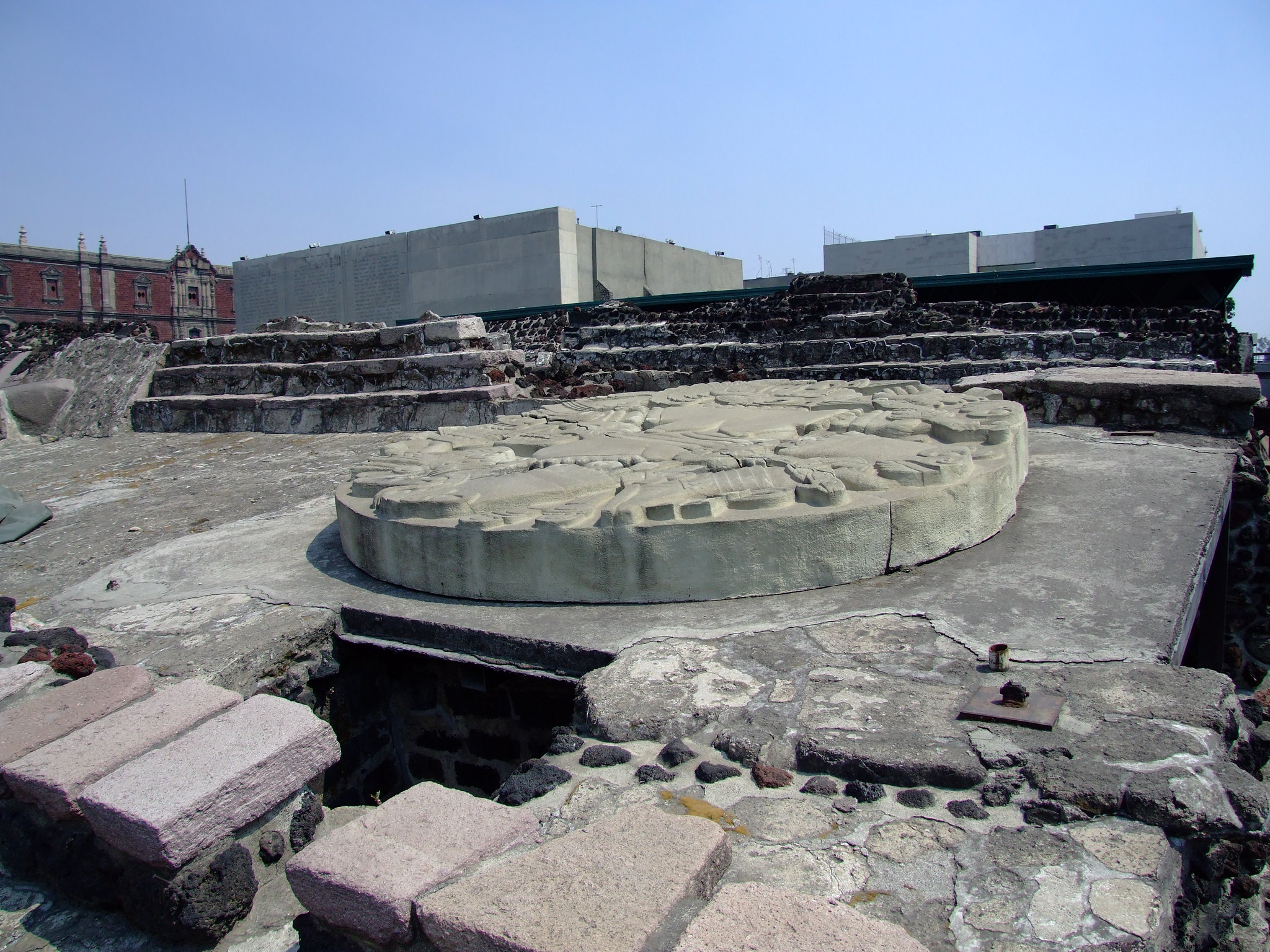
The excavation of Templo Mayor, the great Aztec temple complex in the heart of Mexico City, has been a fascinating journey of discovery that has captivated archaeologists and history enthusiasts alike. The techniques used to unearth this ancient wonder have evolved over time, reflecting advancements in archaeological methods and technology.
When excavations began in earnest in 1978, archaeologists faced a unique challenge. The site was buried beneath centuries of urban development, with modern buildings and streets obscuring the ancient ruins. This meant that traditional open-area excavation methods were not always possible. Instead, researchers had to employ a variety of innovative techniques to access and study the site.
One of the primary methods used was careful stratigraphic excavation. This involves meticulously removing layers of soil and debris one at a time, carefully documenting each level as it’s uncovered. This technique allowed archaeologists to create a detailed timeline of the temple’s construction and use, as well as identify different periods of Aztec history represented in the ruins.
In addition to stratigraphic excavation, archaeologists also utilized test pits and trenches. These smaller, targeted excavations allowed researchers to explore specific areas of interest without disturbing the entire site. This was particularly useful in the early stages of the project when the full extent of the ruins was still unknown.
As the excavation progressed, more advanced techniques were introduced. Ground-penetrating radar (GPR) became an invaluable tool for mapping the site without disturbing the soil. This non-invasive method uses radar pulses to create images of subsurface structures, allowing archaeologists to identify potential areas of interest before digging.
Another important technique used at Templo Mayor was careful water management. The site’s location in a former lakebed meant that groundwater was a constant concern. Archaeologists had to employ pumps and drainage systems to keep excavation areas dry and prevent damage to delicate artifacts and structures.
The preservation of artifacts was also a crucial aspect of the excavation process. As items were uncovered, they were carefully cleaned, cataloged, and in many cases, stabilized to prevent further deterioration. This often involved the use of specialized conservation techniques, such as controlled drying for waterlogged organic materials or the application of protective coatings to fragile stone and ceramic objects.
One of the most exciting aspects of the Templo Mayor excavation has been the use of interdisciplinary approaches. Archaeologists have worked closely with experts from other fields, including geologists, botanists, and zoologists, to gain a more comprehensive understanding of the site and its contents. For example, analysis of plant and animal remains has provided valuable insights into Aztec diet and religious practices.
In recent years, digital technologies have played an increasingly important role in the excavation and study of Templo Mayor. 3D scanning and photogrammetry have been used to create detailed digital models of the site and its artifacts. These models not only aid in research and conservation efforts but also allow for virtual reconstructions that help visitors visualize the temple as it once stood.
As excavations at Templo Mayor continue, new techniques and technologies are constantly being developed and applied. From the careful hand tools of traditional archaeology to the latest in digital imaging and analysis, the methods used at this site represent the cutting edge of archaeological practice. Through these innovative approaches, researchers are continuing to uncover new insights into the fascinating world of the Aztecs, bringing their ancient civilization to life for modern audiences.
The Templo Mayor, located in present-day Mexico City, was the main temple of the Aztec capital Tenochtitlan. It served as the religious and political center of the Aztec Empire, dedicated to the gods Huitzilopochtli and Tlaloc. The temple’s excavation has provided invaluable insights into Aztec culture, religious practices, and daily life. Its multiple construction phases reveal the empire’s growth and architectural advancements over time. The discovery of numerous artifacts, including sculptures, offerings, and human remains, has greatly enhanced our understanding of Aztec rituals and beliefs. The Templo Mayor stands as a testament to the sophistication and complexity of pre-Columbian Mesoamerican civilizations and continues to be a significant archaeological site for ongoing research and cultural preservation.