
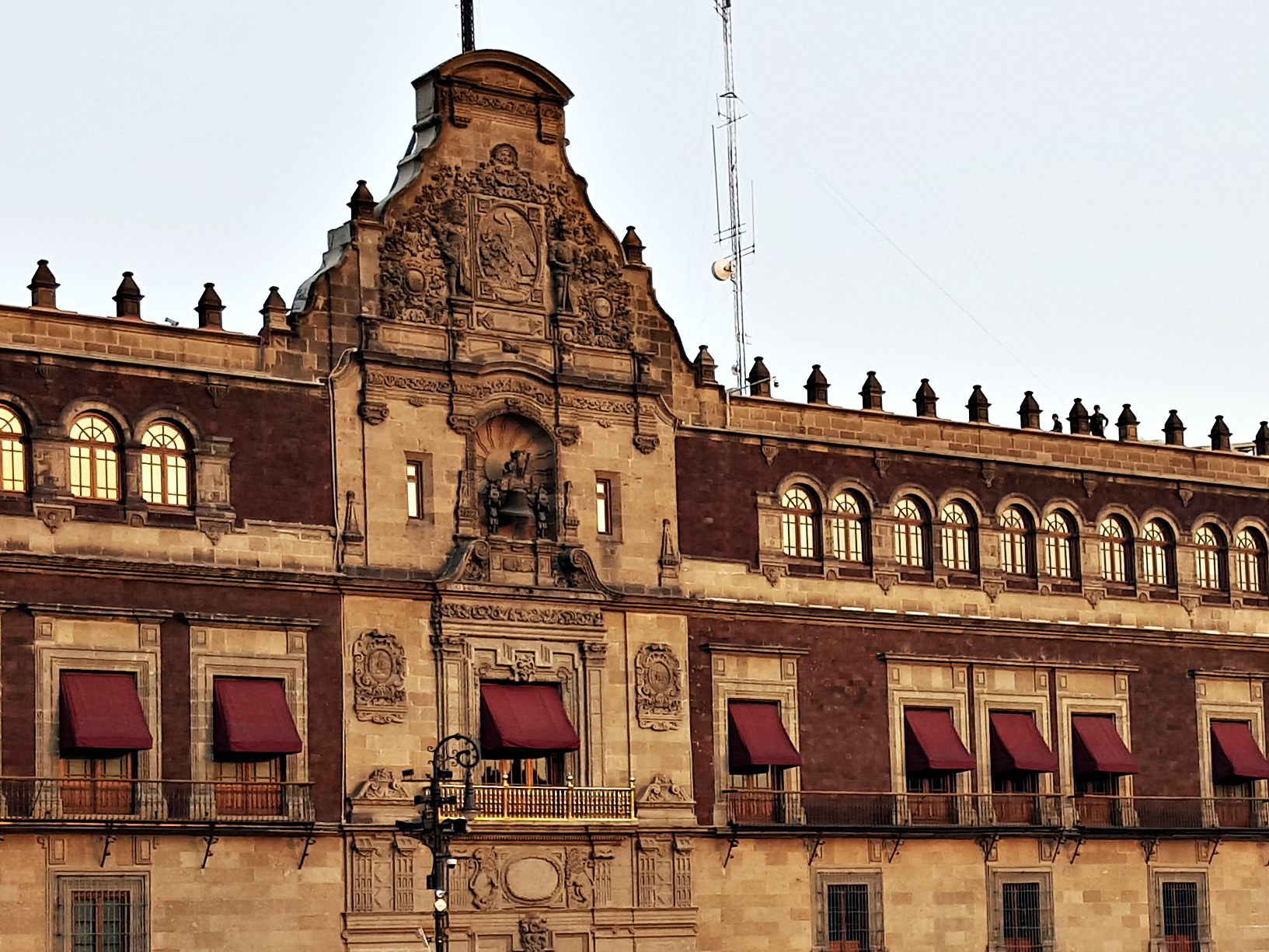
The Palacio Nacional, standing proudly in the heart of Mexico City’s historic center, is a testament to the rich and complex history of the nation it represents. This iconic building has undergone numerous transformations over the centuries, reflecting the changing political landscape and architectural tastes of Mexico.
The story of the Palacio Nacional begins long before the Spanish conquest, on the very same site where the Aztec ruler Moctezuma II once had his palace. After the fall of Tenochtitlan, the Spanish conquistador Hernán Cortés claimed the land for himself and built his own residence there. This initial structure laid the foundation for what would eventually become the seat of Mexican government.
As the colonial period progressed, the building evolved to meet the needs of the Spanish viceroys who governed New Spain. The original Cortés palace was gradually expanded and modified, incorporating elements of Spanish Baroque architecture. These changes reflected the growing importance of Mexico City as the capital of New Spain and the desire to create a grand administrative center befitting its status.
The dawn of Mexican independence in the early 19th century brought about significant changes to the palace. No longer the residence of Spanish viceroys, it became the home of the newly formed Mexican government. This shift in purpose led to further modifications, as the building was adapted to accommodate the needs of a sovereign nation.
Throughout the 19th century, the Palacio Nacional continued to evolve. Various presidents and governments left their mark on the structure, adding new wings, redecorating interiors, and modernizing facilities. The most significant changes came during the long reign of Porfirio Díaz, who sought to transform Mexico City into a grand capital worthy of international recognition. Under his direction, the palace received a neoclassical facelift, giving it much of the appearance we see today.
The Mexican Revolution of 1910 ushered in a new era for the Palacio Nacional. As the country emerged from years of conflict, there was a renewed focus on celebrating Mexico’s indigenous heritage. This cultural shift was reflected in the palace’s architecture and decoration, most notably in the stunning murals painted by Diego Rivera in the 1930s. These massive works of art, which adorn the main staircase and corridors, tell the story of Mexico’s history and serve as a powerful symbol of national identity.
In more recent years, the Palacio Nacional has undergone careful restoration and preservation efforts to maintain its historic character while adapting to the needs of a modern government. Seismic reinforcements have been added to protect the structure from earthquakes, and state-of-the-art security systems have been installed to safeguard both the building and its occupants.
Today, the Palacio Nacional stands as a living museum of Mexican history and architecture. Its walls have witnessed centuries of triumph and tragedy, progress and setback. From its Aztec foundations to its colonial expansions, from its neoclassical renovations to its revolutionary murals, the palace tells the story of a nation in constant evolution.
As visitors walk through its grand corridors and sun-drenched courtyards, they can’t help but feel the weight of history around them. The Palacio Nacional is more than just a seat of government; it is a physical embodiment of Mexico’s journey from colony to independent nation, from revolution to modernity. Its architectural evolution mirrors the country’s own path, making it a true national treasure and a must-see destination for anyone seeking to understand the heart and soul of Mexico.
The Palacio Nacional, located in Mexico City’s main square, stands as a symbol of Mexico’s political power and rich history. This imposing structure houses important government offices, including the presidential offices, and serves as a venue for state ceremonies. Its walls feature Diego Rivera’s famous murals depicting Mexico’s history, making it a significant cultural landmark. The building’s architecture blends colonial and neoclassical styles, reflecting the country’s diverse heritage. As a focal point of Mexican politics and culture, the Palacio Nacional continues to play a crucial role in shaping the nation’s identity and governance.